Scout — The Last Mile
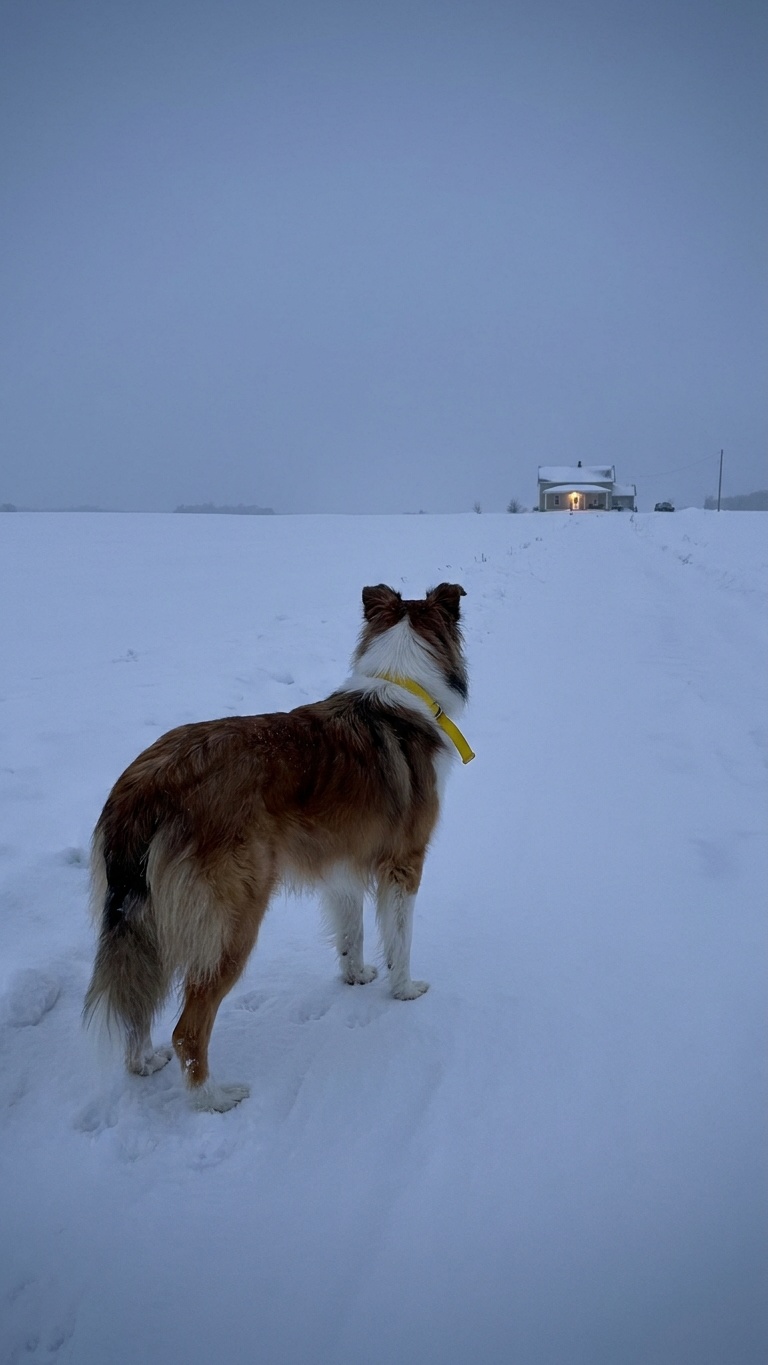
Scout came home in the deepest snow.
Six months gone, and there he was at the field’s edge — thin, moving slow through the white, the porch light far ahead of him. Six months is most of a year in a dog’s life, and whatever road he had walked to get back to that field’s edge, he had walked it alone, in the deepest part of winter.
Last summer he rode asleep in the back of the car, a young collie on a family trip, wearing his own flat dark-teal collar. At a filling station, strange dogs chased him off. They searched and called — and called, and searched — then had to drive home without him. No one who has made that drive forgets it: the empty back seat, the whole way home.
All winter Edith kept his bowl by the door, untouched, washed and set back down each night. It is a small thing, washing a bowl for a dog who is not there. It is also the whole of it — a place kept, every single night, against all the evidence. Tonight she stood listening, one hand near the latch, not daring to hope again.
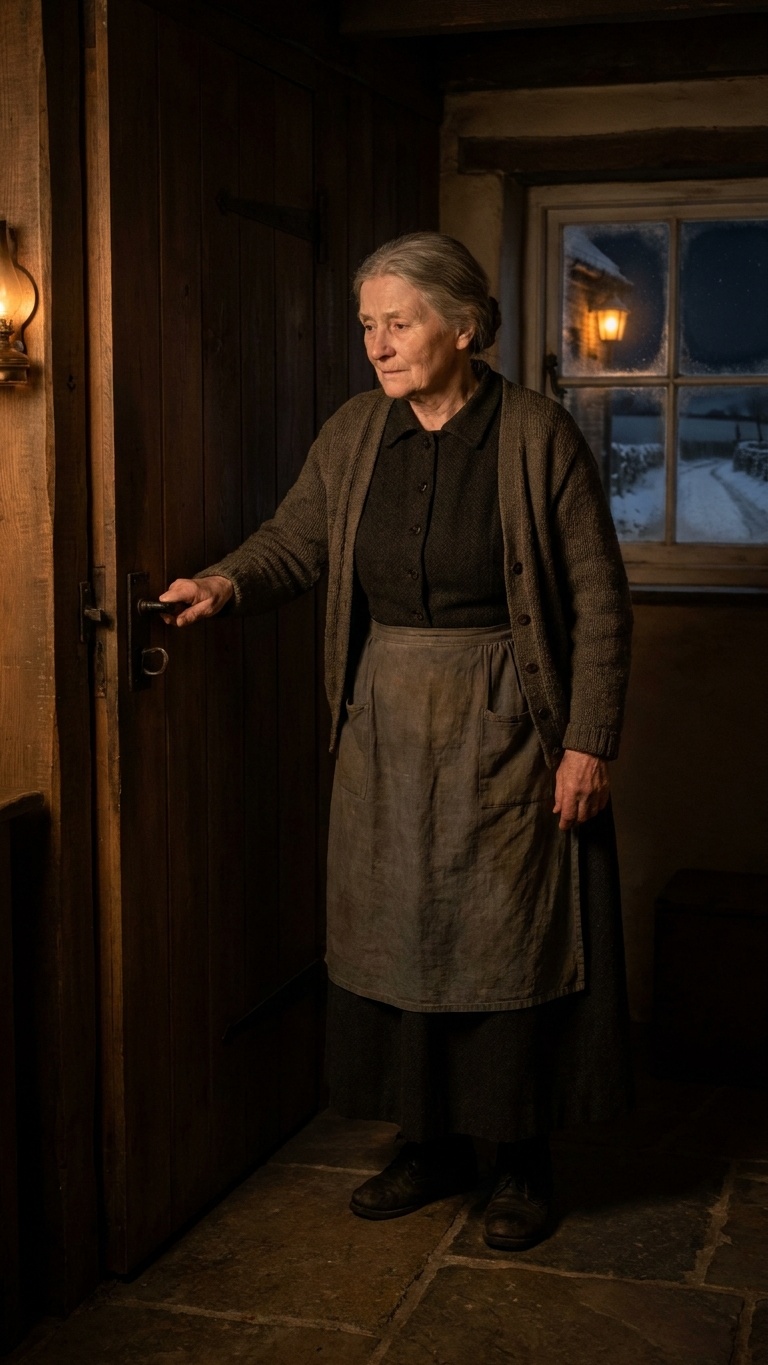
Out in the lane, Scout lifted his head, saw that small light, and knew it. He pushed on, paws breaking the crust, breath short — each step punching through the frozen top of the snow and sinking, the whole way up the lane. Inside, a faint sound made Edith turn toward the door. Two old people and one old hope, on either side of the same door, at the same moment.
The last yards took everything he had — yards he had once covered without thinking, now crossed on feet worn raw from the long road home. Six months of road ends that way: not in a run, but in a dog spending the very last of himself to cross a farmyard.
Walter opened the door, and Scout fell against his legs, thin as shadow.
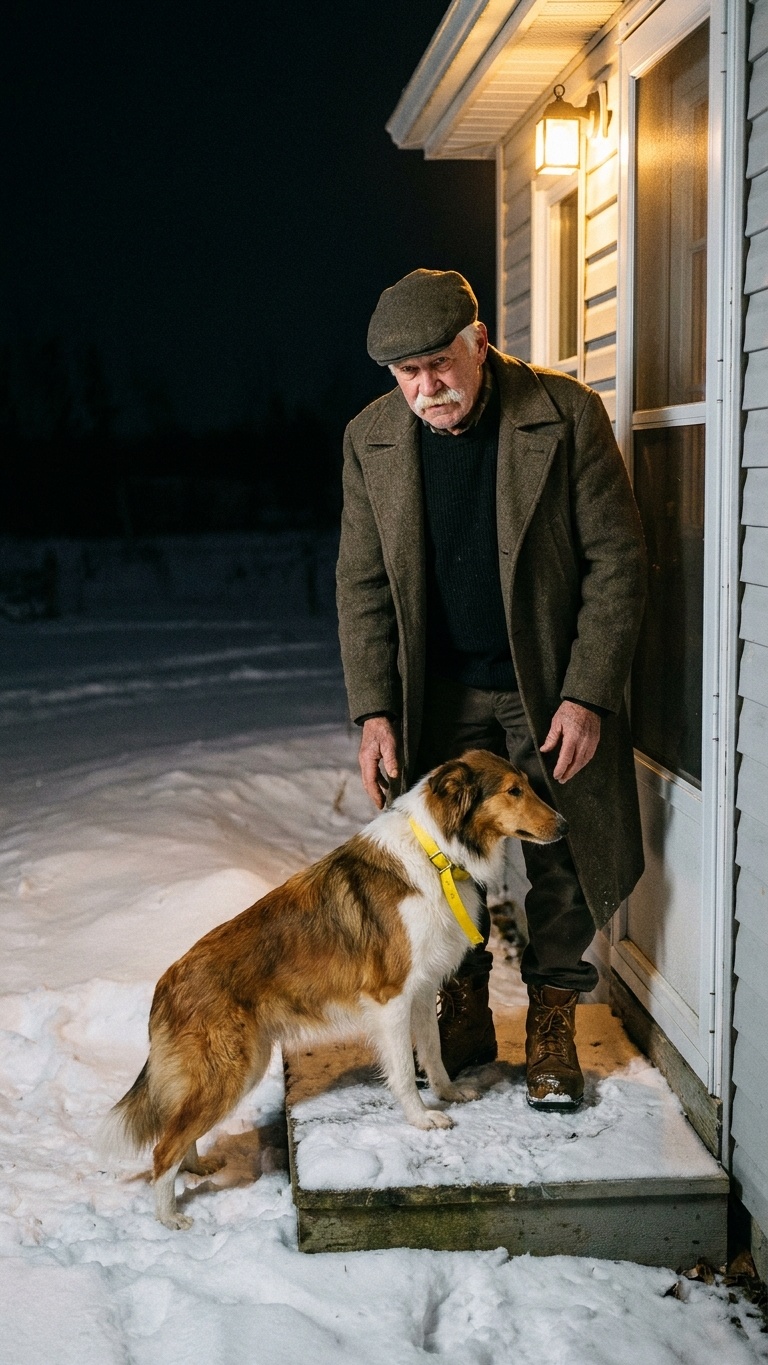
And then they saw the collar. He was not wearing his own dark teal collar. Around his neck was a stranger’s bright yellow nylon collar, too big, doubled back through its buckle, no tags at all. Somewhere along that road, somebody had taken in a lost collie, fed him, kept him, put a collar on him — a collar too big, doubled back to fit — and then, somehow, let him go on. No name. No tags. No way to say thank you.
Somebody along that road had taken him in, and let him go on toward home.